

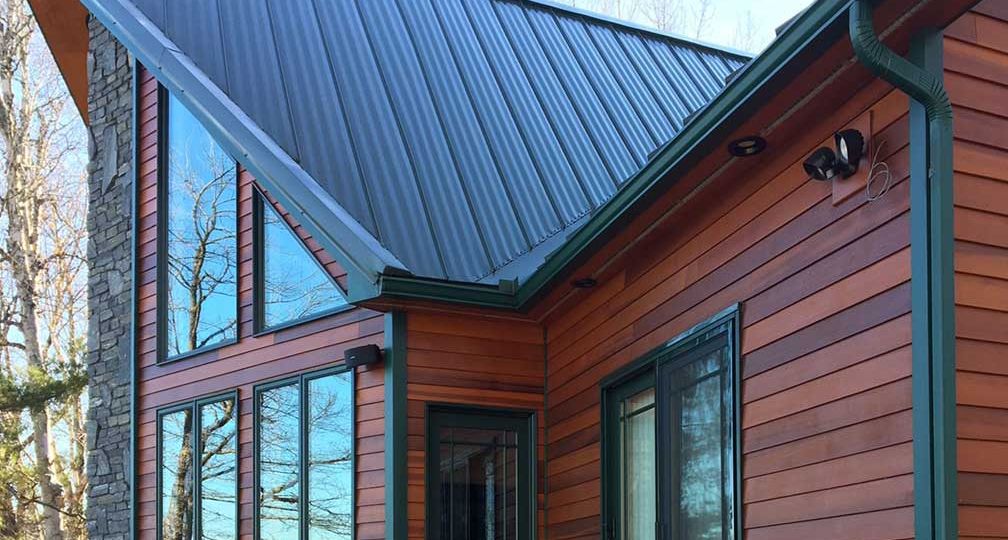
The Complete Guide to Gutter Types for Asheville, NC Homes, Cabins, Vacation Rentals & Commercial Properties
Asheville, North Carolina is one of the most beautiful cities in the American South — a place where Blue Ridge Mountain vistas meet Victorian architecture, thriving arts culture, and some of the most distinctive homes in the region. But living in the mountains comes with its own set of challenges, and one of the most overlooked yet critically important aspects of property maintenance in Western North Carolina is proper gutter installation.
With annual rainfall averaging over 47 inches and snowfall that can pile up in the higher elevations, the gutters on your Asheville home, cabin, vacation rental, or commercial building aren’t just a cosmetic detail — they’re essential infrastructure protecting your foundation, landscaping, siding, and interior from moisture damage. Whether you own a craftsman bungalow in the River Arts District, a mountain cabin retreat in the Smokies, a short-term vacation rental in Black Mountain, or a multi-story commercial building downtown, choosing the right gutter system can save you thousands of dollars in repairs over the life of your property.
In this comprehensive guide, we’ll walk through every major type of gutter available, break down which systems work best for different property types in the Asheville area, and explain why professional installation matters more than most homeowners realize. If you’re ready to protect your property the right way, the gutter installers Asheville NC residents and business owners trust are just a call away.

Why Gutters Matter So Much in Asheville, NC
Before we dive into the types of gutters, it’s worth understanding why this region places extra demands on drainage systems compared to other parts of the country.
Heavy Rainfall and Mountain Runoff
The Southern Appalachians are one of the wettest regions in the eastern United States. Asheville regularly receives intense summer thunderstorms, extended fall rains, and occasional winter ice events. When rain hits a steeply pitched mountain cabin roof, water accelerates rapidly and hits gutters with significant force. Undersized or poorly installed gutters can overflow instantly, dumping water directly against your foundation.
Freeze-Thaw Cycles
Western North Carolina experiences significant temperature fluctuations, especially at higher elevations. Water trapped in gutters during a cold snap can freeze, expand, and warp or crack improperly installed systems. The right gutter material and proper slope are critical for drainage before temperatures drop.
Leaf and Debris Load
Asheville’s tree canopy is spectacular — and relentless in the fall. Oak, maple, poplar, and pine trees shed enormous quantities of leaves, needles, and seed pods that clog gutters quickly. Properties surrounded by the forest canopy that characterizes so many mountain cabins and vacation rentals face even greater debris accumulation.
Steep and Complex Roof Lines
Mountain architecture often features steeply pitched roofs, dormers, turrets, and valleys that create complex drainage challenges. The wrong gutter type or an improper installation on these roof profiles leads to water intrusion, mold, and structural damage.
The Main Types of Gutters Available in Asheville
1. K-Style Gutters (Ogee Gutters)
K-style gutters are the most common residential gutter profile installed in the United States, and they’re extremely popular throughout Western North Carolina for good reason. Viewed from the end, they have a flat back, a flat bottom, and a decoratively shaped front that resembles crown molding — which is why they blend beautifully with the craftsman, Victorian, and Arts and Crafts architectural styles that define so much of Asheville’s housing stock.
Profile and Capacity
K-style gutters come in standard widths of 5 inches and 6 inches. A 5-inch K-style gutter can handle approximately 1.2 inches of rainfall per hour per 100 square feet of roof area, while 6-inch K-style gutters handle around 2 inches per hour. Given Asheville’s storm intensity, 6-inch K-style gutters are often the recommended choice for larger roofs.
Materials Available
K-style gutters are manufactured in aluminum, galvanized steel, copper, and vinyl. In the Asheville climate, aluminum and copper are the most popular choices due to their rust resistance and longevity.
Best For
- Traditional and craftsman-style homes
- Ranch and colonial residences
- Properties in neighborhoods like Kenilworth, Montford, and Lakeview Park
- Homes with standard roof pitches
Pros
K-style gutters hold more water than round gutters of the same width due to their flat bottom design. They’re also easier to attach directly to the fascia board, which makes installation cleaner and less prone to leakage.
Cons
The corners of K-style gutters can trap debris and are more difficult to clean than half-round systems. In areas with very heavy leaf fall, clogging can be a persistent issue without gutter guards.
2. Half-Round Gutters
Half-round gutters have a classic, historic appearance — a perfect semicircle profile that was the dominant residential gutter style in the United States prior to World War II. If you live in one of Asheville’s beautiful Victorian or historic homes, or if you want to preserve the architectural integrity of a heritage property, half-round gutters are often the most authentic and aesthetically appropriate choice.
Profile and Capacity
Half-round gutters are measured by diameter (typically 4, 5, or 6 inches). Their curved interior means water moves through them more freely and with less turbulence than K-style systems, which actually reduces corrosion over time in metal gutters.
Materials Available
Half-round gutters are available in aluminum, galvanized steel, copper, and zinc. Copper half-round gutters are a particularly striking choice on historic Asheville homes, developing a beautiful patina over time that becomes a genuine design feature.
Best For
- Historic and Victorian homes, especially in the Montford Historic District
- Craftsman bungalows
- Properties where architectural authenticity is a priority
- Homes that already have round downspouts
Pros
The smooth curve of half-round gutters allows debris to flush out more easily than K-style, reducing clogging. They’re also less likely to trap standing water, which lowers the risk of rust and corrosion. For copper gutters, the aesthetic aging process adds genuine curb appeal.
Cons
Half-round gutters of the same width hold slightly less water than K-style gutters. They also require special round downspouts and hangers (typically spike-and-ferrule or T-bar hangers), which can add to installation cost. They tend to be pricier than K-style systems overall.
3. Seamless Gutters
Seamless gutters aren’t technically a separate profile — they can be manufactured in either K-style or half-round profiles — but they represent the most significant advancement in residential gutter installation technology in decades, and they deserve their own section because of how dramatically they outperform traditional sectional systems.
What Makes Them Different
Traditional sectional gutters are assembled from pre-cut pieces that are joined together with connectors and sealant. Every joint is a potential point of failure — a place where water can seep through, where debris can catch, and where the system can sag over time as sealants age and fail.
Seamless gutters are fabricated on-site by a professional installer using a portable roll-forming machine. The machine feeds a coil of aluminum (or other metal) through a series of rollers that shape it into the desired gutter profile, cutting it to the exact length needed for each run of your roof. The only seams are at corners and downspout connections — dramatically reducing leak points.
Why Seamless Gutters Are the Standard in Asheville
Given the rainfall intensity, freeze-thaw cycles, and significant debris load in Western North Carolina, seamless gutters have become the installation standard for quality gutter contractors throughout the region. The reduction in joint failures alone makes them a superior long-term investment.
Materials
Seamless gutters are most commonly manufactured in .027 gauge aluminum (standard) or heavier .032 gauge aluminum for commercial and heavy-duty applications. They’re available in dozens of factory-applied colors, and copper seamless gutters are available for premium installations.
Best For
- Virtually any residential property
- Mountain cabins with heavy debris exposure
- Vacation rentals where maintenance visits are infrequent
- Any property where long-term performance is the priority
Pros
Dramatically fewer leaks, cleaner appearance, custom fit to your exact roof measurements, available in dozens of colors.
Cons
Must be professionally installed — you cannot purchase seamless gutters at a hardware store and install them yourself. This actually ensures quality, but it does mean you need a qualified contractor.
4. Box Gutters (Built-In Gutters)
Box gutters, also called built-in gutters or concealed gutters, are a traditional architectural element found on many older homes throughout the South. Rather than being attached to the exterior fascia, box gutters are constructed as part of the roof structure itself — a trough built into the eave of the roof, lined with metal, that drains water through interior downspouts concealed within the building structure.
History and Prevalence in Asheville
Many of Asheville’s grand Victorian and Colonial Revival homes — the kind you find in Kenilworth, Grove Park, and Albemarle Park — were originally constructed with box gutters as an integral part of their architectural design. These gutters are beautiful when properly maintained, but they require specialized knowledge and regular inspection.
Maintenance Challenges
Box gutters that are not properly maintained can be a source of catastrophic water damage. When the metal lining deteriorates or cracks, water leaks directly into the roof structure, causing rot, mold, and structural damage that can be extremely expensive to repair. Any property with box gutters should have them inspected by a qualified gutter professional at least annually.
Best For
- Historic preservation projects
- Period-appropriate restoration of Victorian and Colonial Revival homes
- Situations where exterior gutters would compromise architectural integrity
Pros
Architecturally integrated, invisible from the street, preserves the historic character of older homes.
Cons
Expensive to repair and maintain, requires specialized contractors, significant water damage risk if neglected.
5. Fascia Gutters
Fascia gutters replace the fascia board entirely — the gutter itself acts as the fascia, providing a clean, contemporary look with a large water-holding capacity. They’re popular on modern homes and commercial buildings where a streamlined exterior profile is desired.
Profile
Fascia gutters typically have a larger cross-section than K-style gutters, providing superior water-handling capacity. They mount directly to the rafter tails, which means they must be installed during initial construction or a significant renovation — retrofitting them onto an existing home requires more work than replacing a standard gutter system.
Best For
- Modern and contemporary architecture
- New construction projects
- Commercial buildings
- Large custom homes
Pros
Large capacity, clean appearance, eliminates the need for a separate fascia board.
Cons
Complex installation, typically requires professional fabrication, not practical as a retrofit on most existing homes.
6. European-Style Gutters
European-style gutters (sometimes called German gutters or OG gutters) feature a more complex profile than standard K-style or half-round options. They’re characterized by decorative front faces, ogee curves, and a refined appearance that suits traditional and formal architectural styles.
These gutters are most commonly fabricated in copper or zinc and are typically found on high-end custom homes, restored historic properties, and architecturally significant buildings. The cost is considerably higher than standard aluminum systems, but the aesthetic and longevity benefits can justify the investment on premium properties.

Gutter Materials: Which Is Right for Your Asheville Property?
Choosing the right material is just as important as choosing the right profile. Here’s a breakdown of the most common options:
Aluminum
Aluminum is the most popular gutter material in the United States by a significant margin, and for good reason. It’s lightweight, rust-proof, relatively affordable, and available in a wide variety of colors that can be factory-applied for a finish that won’t chip or peel for years. In the Asheville climate, aluminum’s resistance to rust and corrosion makes it an excellent choice.
Standard residential aluminum gutters are manufactured from .027 gauge material. Heavier .032 gauge aluminum is available for commercial applications or in areas with heavy snow and ice loads.
Lifespan: 20–30 years with proper maintenance.
Copper
Copper gutters are the premium choice — durable, beautiful, and maintenance-free in terms of corrosion. When new, copper has a bright, warm metallic sheen. Over time, it develops the distinctive blue-green patina (verdigris) that is immediately recognizable and genuinely beautiful on older homes.
Copper requires no painting or coating, never rusts, and has a lifespan of 50–100 years when properly installed. The cost is three to five times that of aluminum, but for the right property — a restored Victorian in Montford, a high-end custom home in the Grove Park area, a luxury vacation rental — copper gutters are a worthwhile investment that actually increases property value.
Lifespan: 50–100+ years.
Galvanized Steel
Galvanized steel gutters are heavy and strong — significantly more durable than aluminum in terms of physical impact resistance. This makes them worth considering for properties where falling branches are a concern (a real consideration on mountain properties surrounded by large hardwoods).
The downside of galvanized steel is corrosion. Once the galvanized coating is breached — by scratches, impact, or simply age — rust develops rapidly in a wet climate like Asheville’s. Regular painting and maintenance can extend the life of steel gutters, but they ultimately require more upkeep than aluminum or copper.
Lifespan: 15–20 years.
Zinc
Zinc gutters are extremely popular in Europe and are gaining ground in premium American installations. Like copper, zinc develops a natural patina (a blue-gray coating) that actually protects the metal. Zinc gutters are durable, beautiful, and have an extremely long service life. They’re most commonly used on high-end residential and commercial projects.
Lifespan: 50–80 years.
Vinyl
Vinyl gutters are the least expensive option and are sold as DIY kits at hardware stores. They’re lightweight, easy to install, and don’t rust or corrode. However, in the Asheville climate, vinyl has significant drawbacks. It becomes brittle in cold temperatures and can crack or shatter during ice events. It fades and discolors over time in UV exposure. And it lacks the structural rigidity needed on longer runs without excessive support.
Vinyl gutters are generally not recommended for Asheville properties. The savings in initial cost are typically offset by earlier replacement and more frequent failures.
Lifespan: 10–15 years (less in cold climates).
Gutter Systems for Mountain Cabins and Vacation Rentals in the Asheville Area
Asheville and the surrounding region — including Weaverville, Black Mountain, Swannanoa, Mars Hill, Brevard, and the communities along the Blue Ridge Parkway — host thousands of mountain cabins and short-term vacation rental properties. These properties present unique gutter challenges that deserve special attention.
The Unique Challenges of Cabin and Vacation Rental Properties
Remote Locations and Infrequent Maintenance
Vacation rental properties, by definition, are not owner-occupied on a daily basis. This means that gutter problems can go undetected for extended periods. A clogged gutter that would be noticed and cleared within days on a primary residence might go unaddressed for weeks or months on a seasonal cabin. The result can be significant water damage to foundations, siding, and interior spaces.
For vacation rental owners, investing in a high-performance, low-maintenance gutter system isn’t optional — it’s essential risk management. Seamless gutters combined with quality gutter guards are the standard recommendation for short-term rental properties precisely because they minimize the need for frequent cleaning and inspection.
Heavy Tree Coverage
Mountain cabins are typically set among mature forest — exactly what makes them beautiful and appealing to renters. But tall oaks, maples, hemlocks, and white pines shed enormous quantities of debris year-round. Without proper gutter protection, gutters on wooded cabin properties can fill with leaves and pine needles within weeks of being cleaned.
Steep Roof Pitches
Mountain cabin architecture frequently features steep-pitch roofs (8/12, 10/12, or steeper) designed to shed snow and look picturesque. These pitches generate high water velocity, which means gutters need to be sized appropriately and installed with proper hanger spacing to handle the volume and force of runoff.
Snow and Ice Loads
Properties at higher elevations around Asheville can receive significant snow accumulation. When snow slides off a metal roof or steep pitch, it can physically damage or completely rip off improperly installed gutters. Proper hanger spacing, appropriate gutter sizing, and sometimes snow guards on the roof itself are all important considerations.
Recommended Gutter System for Cabins
For most mountain cabins and vacation rentals in the Asheville area, the recommended gutter system is:
- Profile: 6-inch seamless K-style aluminum gutters
- Gauge: .032 for heavier-duty performance
- Downspouts: 3×4-inch rectangular or 4-inch round
- Hangers: Hidden hanger style, spaced 18–24 inches for maximum support
- Gutter guards: Micro-mesh or reverse-curve guards appropriate for the debris profile
This combination provides maximum water-handling capacity, structural integrity under debris and snow loads, and the lowest possible maintenance requirements between owner visits.
Commercial Gutter Systems in Asheville
Commercial properties in Asheville — whether downtown retail and restaurant spaces, office buildings, industrial facilities, multi-family housing, or mixed-use developments — have drainage needs that go well beyond standard residential systems.
For professional commercial gutters installation, the specifications, materials, and approach are significantly different from residential work.
What Makes Commercial Gutters Different?
Scale and Volume
Commercial buildings typically have large, flat, or low-pitch roof sections that accumulate significant water volume during a storm. The drainage capacity required is far greater than any residential system.
Box Gutters and Internal Drains
Many commercial buildings use internal roof drains rather than perimeter gutters. When perimeter systems are used on commercial properties, they’re typically larger — 6-inch or even 8-inch systems — and may use box gutters designed to handle the full drainage area of the roof.
Downspout Requirements
Commercial properties often require larger downspouts — 3×4 inch, 4×5 inch, or even larger round downspouts — to handle the volume of water drainage from large roof areas. Downspout placement must also comply with local building codes and consider drainage pathways that avoid walkways, parking areas, and neighboring properties.
Material Specifications
Commercial gutter work frequently calls for heavier gauge aluminum (.032 or .040), galvanized steel, or even stainless steel in industrial applications where chemical resistance is required. Coatings and finishes may need to meet specific architectural specifications, especially on visible commercial facades.
Code Compliance
Commercial gutter installations in Asheville must comply with North Carolina building codes and may require permits, engineering calculations for drainage capacity, and inspections. Professional commercial gutter contractors understand these requirements and ensure that all work is code-compliant from the start.
Types of Commercial Properties Served
Commercial gutter systems in the Asheville area serve a wide variety of property types:
- Downtown retail and restaurant buildings: Asheville’s vibrant downtown, with its mix of historic brick buildings and modern infill construction, requires gutter systems that can be integrated tastefully into architecturally sensitive facades.
- Office and mixed-use buildings: Multi-story commercial buildings require engineered drainage solutions with appropriate capacity and downspout placement.
- Multi-family housing: Apartment complexes, condominiums, and townhome developments require commercial-grade systems sized for the full building drainage area.
- Industrial and warehouse facilities: Heavy-gauge systems designed for large, flat roof areas, often integrated with internal drain systems.
- Hotels and lodges: The Asheville area’s thriving hospitality industry means dozens of hotels, mountain lodges, and bed-and-breakfast properties require reliable commercial gutter systems that present well to guests.
- Medical and institutional facilities: Hospitals, schools, and government buildings require long-lasting, low-maintenance commercial drainage systems.
Gutter Guards: Are They Worth It in Asheville?
Given the heavy tree canopy throughout Western North Carolina, gutter guards are worth serious consideration for most Asheville-area properties. However, not all gutter guards are created equal — and some perform far better in the specific debris environment of the Southern Appalachians.
Types of Gutter Guards
Micro-Mesh Guards
Micro-mesh guards are widely considered the most effective type for most applications. A fine stainless steel mesh covers the gutter opening, allowing water to flow through while blocking leaves, pine needles, seed pods, and even small debris. For Asheville properties surrounded by pines and hardwoods, micro-mesh guards are the top recommendation.
Reverse-Curve (Surface Tension) Guards
Reverse-curve guards use the principle of water adhesion — water follows the curve into the gutter while leaves and debris fall off the edge. They work well in moderate debris environments but can be overwhelmed by heavy needle and small-particle debris from pine trees. They’re a reasonable choice for properties without heavy pine coverage.
Screen Guards
Basic screen guards sit atop the gutter and block larger debris. They’re an improvement over unprotected gutters but allow smaller debris like pine needles, shingle grit, and seed pods to pass through and accumulate inside the gutter. In Asheville’s high-debris environment, screen guards typically require more maintenance than micro-mesh alternatives.
Foam Inserts
Foam gutter inserts sit inside the gutter and allow water to flow through while blocking debris on top. They have significant problems in the Asheville climate — they trap moisture, promote mold and mildew growth, and create an ideal habitat for nesting insects and small animals. They’re generally not recommended.
Brush Inserts
Similar to foam inserts, brush-style guards sit inside the gutter with bristles facing up to catch debris. They have the same moisture-trapping and nesting problems as foam inserts and are not recommended for properties with significant tree coverage.
The Bottom Line on Gutter Guards
For most Asheville-area properties — and especially for mountain cabins and vacation rentals where maintenance visits are infrequent — quality micro-mesh gutter guards represent a sound investment. They won’t eliminate the need for periodic inspection and cleaning entirely, but they dramatically reduce cleaning frequency and protect against the overflow events that cause foundation and basement moisture problems.
Downspouts: The Overlooked Half of Your Gutter System
A gutter system is only as effective as its downspouts. Overloaded, improperly placed, or clogged downspouts are responsible for a significant percentage of the water damage that homeowners mistakenly attribute to gutter failures.
Downspout Sizing
Residential downspouts come in two standard configurations:
- 2×3-inch rectangular: Standard for 4- and 5-inch gutters on smaller roofs
- 3×4-inch rectangular: Standard for 5- and 6-inch gutters; recommended for most Asheville properties
- 4-inch round: Popular alternative to rectangular; equivalent capacity to 3×4
As a rule of thumb, one downspout per 20–30 linear feet of gutter is a reasonable starting point for most residential applications, but the right number depends on your roof area, drainage slope, and local rainfall intensity. In Asheville, erring on the side of more downspouts is always wise.
Downspout Extensions and Drainage
Where your downspouts discharge water is critical. Water that discharges immediately against your foundation will eventually work its way into your basement, crawl space, or under your slab — leading to moisture problems, mold, and structural damage.
Downspout extensions should carry water at least 4–6 feet away from the foundation. Underground drainage lines that carry water to a daylight outlet, dry creek bed, or French drain are the most effective solution, especially on sloping mountain lots where natural drainage paths can be complex.
Choosing a Gutter Installer in Asheville, NC
With any contractor selection, credentials and local experience matter. When evaluating gutter installers in the Asheville area, look for:
Local Experience
A contractor who has been working in Western North Carolina for years understands the specific challenges of mountain properties — steep pitches, heavy debris, freeze-thaw cycles, and the architectural character of Asheville’s diverse housing stock. Local experience isn’t just a nice-to-have; it meaningfully affects the quality of the work.
Seamless Gutter Fabrication
Ensure that your installer fabricates seamless gutters on-site rather than assembling pre-cut sectional gutters. The difference in long-term performance is significant, especially in a climate like Asheville’s.
Proper Hanger Spacing and Slope
Ask specifically about hanger spacing (hidden hangers every 18–24 inches is the standard) and gutter slope (typically 1/4 inch drop per 10 feet of run toward the downspout). Improper slope leads to standing water and accelerated gutter deterioration.
Licensed and Insured
Always verify that your gutter contractor is properly licensed in North Carolina and carries both general liability insurance and workers’ compensation coverage. This protects you from liability in the event of a job-site injury or property damage.
Warranty
Quality gutter installers stand behind their work with a workmanship warranty. Material warranties from the manufacturer cover defects in the product itself, but a workmanship warranty covers the installation — which is where most failures actually originate.
Maintaining Your Gutters in the Asheville Area
Regardless of the gutter system you choose, maintenance is essential for long-term performance. Here’s a basic maintenance calendar for Asheville-area properties:
Spring (March–April)
Clean gutters after winter to remove debris accumulated over the fall and winter. Inspect for damage from ice, falling branches, or settling. Check downspout drainage and ensure extensions are properly positioned. This is also an ideal time for a professional inspection if you haven’t had one recently.
Late Fall (October–November)
After the leaves fall (typically late October through mid-November in the Asheville area), gutters need to be cleaned thoroughly before winter. Clogged gutters going into winter are a recipe for ice damming, overflow, and freeze-thaw damage.
After Major Storms
After significant wind events or ice storms, visually inspect your gutters for sagging, damage, or debris accumulation. Large fallen branches can physically dislodge gutters from fascia boards, and these should be addressed promptly.
Vacation Rental Properties
If you own a vacation rental, consider scheduling professional gutter cleaning at least twice annually — ideally in spring and late fall — as part of your regular property maintenance program. Having a relationship with a reliable local gutter contractor who can respond quickly to issues is invaluable for remote property owners.
Conclusion: Protect Your Asheville Property with the Right Gutter System
Your gutter system is one of the most important investments you can make in the long-term health of your Asheville-area property — whether it’s a primary residence, mountain cabin, vacation rental, or commercial building. Getting it right means choosing the correct profile, material, and sizing for your specific property and climate conditions, and having it installed by professionals who understand the demands of Western North Carolina’s unique environment.
From seamless aluminum K-style gutters on residential homes to heavy-gauge commercial systems on downtown Asheville buildings, from copper half-round gutters on historic Montford Victorians to low-maintenance seamless systems with micro-mesh guards on remote mountain cabins — the right solution is out there for every property type and budget.
Don’t wait for a clogged gutter to cause a foundation leak, a rotted fascia board, or a flooded crawl space. The gutter installers Asheville NC property owners rely on are ready to assess your property and recommend the best solution for your needs. Whether you need a new installation, a replacement system, commercial gutter work, or gutter guards for your vacation rental, professional help is just a call away.
Protect your investment. Protect your property. Start with the right gutter system.
